ShadeLA is powered by USC Public Exchange in collaboration with UCLA Luskin Center for Innovation, and participation by the City of Los Angeles, County of Los Angeles Chief Sustainability Office, LA Metro, Southern California Association of Governments, and the Los Angeles Organizing Committee for the 2028 Olympic and Paralympic Games (LA28).
About
The Shade Story
Shaping the present — and future — of shade in LA
ShadeLA is a people-powered campaign to cool Los Angeles, co-organized by USC Dornsife Public Exchange and UCLA Luskin Center for Innovation, and with participation by the City of Los Angeles, County of Los Angeles Chief Sustainability Office, LA Metro, Southern California Association of Governments, the Los Angeles Organizing Committee for the 2028 Olympic and Paralympic Games (LA28), and 30+ nonprofit, design, and other impact partners.
A City Shaped by Trees
A Future Shaped by Shade
Los Angeles has long used big moments to reshape its identity through its environment. From palm-lined boulevards to the Olympic forest, L.A.’s past tells a story of how trees have symbolized growth, ambition, and civic pride.
Today, L.A. faces a new kind of challenge: extreme heat. Record-breaking temperatures are making it harder to walk to school, wait for a bus, or play outside. That’s why ShadeLA is flipping the script—reframing shade not as an amenity, but as essential infrastructure for public health, community resilience, and a more livable L.A.
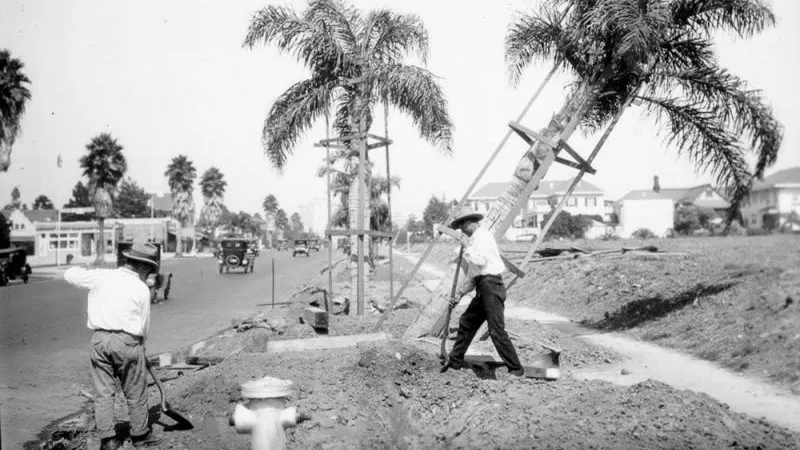
Photo courtesy of Security Pacific National Bank Photo Collection/Los Angeles Public Library.
Shade Through the Decades
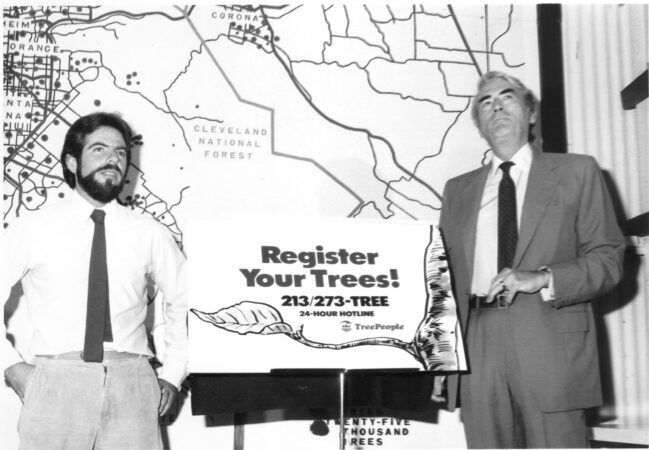
Photo courtesy of TreePeople
-
1932
Palms for the World
As L.A. prepared for the 1932 Olympic Games and tackled Great Depression unemployment, the city planted around 40,000 Mexican fan palms along boulevards—part of a $100,000 beautification and relief program using 400 laborers across 150 miles.
-
1984
One Million Trees
In response to the 1970 Clean Air Act, the Los Angeles Planning Department called for “planting a million trees to combat smog and improve air quality.” Between 1981–1984, TreePeople launched its citywide Million Trees Campaign—and in just three years, planted a million trees, placing its one-millionth tree just four days before the start of the 1984 Olympic Games.
The campaign mobilized thousands of volunteers, delivered trees to schools and low-income households, and marked a major civic effort to improve L.A.’s air—and set a new standard for urban greening.
-
2028
Shade for a Hotter L.A.
With L.A. in a mega-sporting event era that includes the World Cup (2026), Super Bowl (2027), and the LA28 Olympic and Paralympic Games (2028), our needs have shifted again. It’s no longer just about planting—it’s about protecting people in a hotter city.
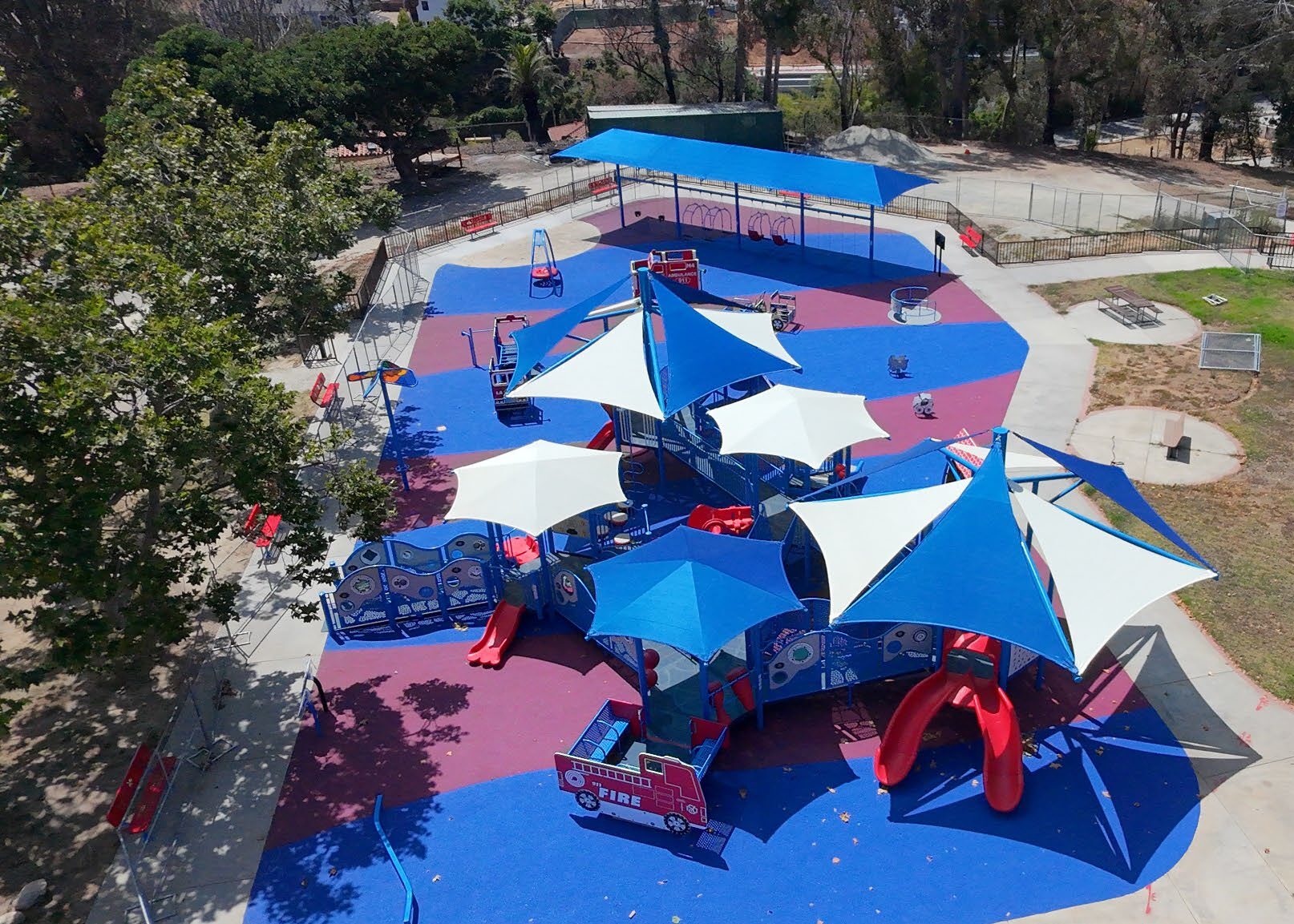
Photo courtesy of Los Angeles Parks Foundation
From Trees to Shade
A Shift in Strategy
We still plant trees—but ShadeLA wants to take things further. We aim to combine a living canopy with built solutions: canopies, shade structures, upgraded transit stops, and pop-up cooling zones. This approach is integrated into our Shade Oasis, Shade Zones, Shade Corridors, and Shade Commons efforts. It’s not just about planting—it’s about making sure shade actually shows up where and when people need it most.
ShadeLA is focused on the quality of shade, not just the number of trees planted. That’s why we’re starting with function:
- Does the shade fall where people wait, walk, learn, or gather?
- Does it help close the shade gap between neighborhoods, making sure all communities have shade where it’s needed most?
- Does it provide relief during the hottest hours of the day?
Whether it’s a tree or a canopy, if it cools a space and protects people, it counts. Join us in creating more shade solutions for a cooler L.A.—not just for tomorrow’s city, but for today’s safety, health, and resilience.
Frequently Asked Questions
Shedding light on shade
-
-
We bring together local governments, community organizations, academic institutions, and private-sector partners to expand equitable access to shade. We work across the region to identify priority areas, coordinate resources, pilot innovative shade solutions, and support long-term planning that makes neighborhoods cooler, healthier, and more resilient.
-
Short answer: Yes! Average temperatures across Los Angeles have been rising—and experts say some LA neighborhoods will spend up to 3 months a year over 95°F by 2050 (LA Times). Shade can drop the feels-like temperature by up to 70°F—which not only makes our streets more comfortable and walkable, but also saves lives (Springer).
-
Yes. Whether you’re a resident, business owner, school administrator, or nonprofit representative wanting to get in the shade game, find your next step under “Get Involved.”